Brazil Betting Ban: What Happens to Player Balances?
Brazil has ended fixed-odds betting under a provisional measure. Here is what the official closure rules say about platform shutdowns, remaining account balances and the limits of the repayment process.
- Published
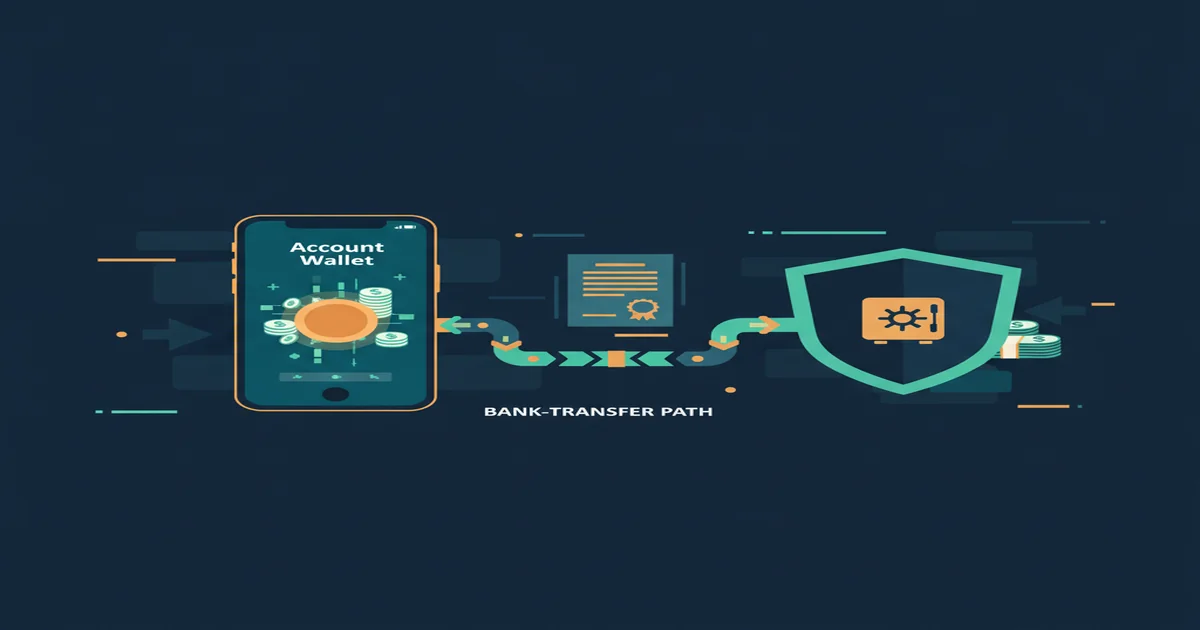
Brazil has moved from a regulated fixed-odds betting market to a prohibition under Provisional Measure No. 1,394 of 25 September 2026. The measure prohibits the operation, offer, intermediation and advertising of fixed-odds betting lotteries nationwide. That wording covers the regulated sports-betting and online-gaming products that had operated under federal authorisations; it does not make every product that uses the word “game” identical under Brazilian law.
For customers, the immediate issue is not whether a familiar betting app or .bet.br domain once appeared on an authorised list. It is whether money left in an account is being returned through the closure process. The Ministry of Finance’s Secretariat of Prizes and Betting (SPA) has published rules for operators whose authorisations are being extinguished, while the government’s former-authorisation list now carries a prominent warning about the prohibition.
What changed under Brazil’s betting ban?
MP No. 1,394/2026 was published on 25 September and took effect on publication. It amended the legal framework for fixed-odds betting to prohibit offering, operating, intermediating and advertising the product in Brazil. The measure also creates an interinstitutional committee focused on enforcement against illegal fixed-odds betting and advertising.
A provisional measure has immediate legal effect, but it is not automatically permanent legislation. It must be considered by Congress within the constitutional timetable. The current prohibition and the closure rules should therefore be checked against official updates, rather than treated as a permanent description of the Brazilian market or as a reason to use an offshore alternative.
The SPA’s official list is now titled as a list of companies authorised up to the validity of MP No. 1,394/2026. It records former authorised companies, brands and domains, but the list itself is not a directory of platforms that customers can lawfully use now. A historic authorisation does not override the later prohibition.
What the closure rule says about customer balances
Portaria SPA/MF No. 3,005, dated 2 October 2026, sets the final procedures and deadlines for regulatory, financial, accounting, registration and information obligations owed by operators whose authorisations are extinguished under the provisional measure. The order is directed to the former operators, but it is relevant to customers because it requires an organised account of outstanding obligations during closure.
The published rule does not turn a platform balance into a new wager or require a customer to gamble to release it. A remaining balance is an outstanding obligation to be addressed in the closure process. Customers should preserve evidence of the balance, the account holder’s identity details, deposits, prior withdrawals and all messages from the operator or payment institution.
Industry reporting on the implementation timetable said customers were first given until 5 October to withdraw balances voluntarily, followed by operator reporting and bank-led repayment steps. Those operational dates should be treated as a snapshot of the transition, not as a substitute for an individual instruction from a bank or the government. The binding sources are the provisional measure, the SPA order and any later official notice that applies to the customer’s account.
What to do if a Brazilian betting account still shows money
- Do not place another bet or make a new deposit. A balance issue is not solved by further play, and the prohibition means a platform’s continued availability is not proof that it is authorised.
- Save account evidence. Download transaction history where possible and capture the balance, account identifier, registered CPF details, deposit method and withdrawal requests. Include the page URL and the date in screenshots.
- Use only verified contact channels. Start with the operator contact details previously used for the account and any official communication from the bank or government. Do not follow a recovery link sent through an unsolicited social-media message.
- Confirm the destination account. The government’s earlier fixed-odds betting framework required a customer to register an account in their own name as the source and destination for funds. Treat requests to send money to a third party, buy cryptocurrency or pay a “release fee” as a fraud warning.
- Contact the payment institution promptly. If the operator gives no clear route, ask the bank or payment provider whether it has a verified repayment instruction linked to the betting account. Keep the case number and written response.
- Escalate suspected fraud separately. An unauthorised payment, credential theft or identity-document request should be reported to the relevant bank and law-enforcement or consumer-protection channel without waiting for a platform dispute to conclude.
Do not disclose passwords, one-time codes, card security details or a new Pix payment merely because a sender knows the former operator’s name. A real repayment process should not require an extra stake, a tax paid directly to an individual, or an advance fee to “unlock” a balance.
Why an old authorised-domain list is not enough
Before the ban, the SPA published company names, CNPJ numbers, brands, domains and authorisation orders to identify operators that had been permitted to offer fixed-odds betting. That archive remains useful for establishing which legal entity ran a particular brand, but its status has changed. The page updated on 9 October warns that MP No. 1,394 prohibited the activity across Brazil.
That distinction matters for phishing risk. Fraudsters can reuse the name of a former authorised brand or reproduce an old .bet.br address in a message about refunds. An address ending in .bet.br, a copied licence image or a historic entry in the list does not authenticate a payment request. Customers should independently open the official Ministry of Finance pages and compare any instruction with the legal entity and channel they already know.
Can a former operator keep customer funds because the market closed?
Closure of an authorisation does not erase obligations incurred while the operator was active. That is the premise of the SPA’s October order, which specifies final obligations for former authorised operators. It does not guarantee that every case will be frictionless or that every reported balance will be paid on the same day; account ownership, fraud controls, incorrect banking details and disputed transactions can still require review.
A customer with a balance should ask for the status in writing: whether the account is included in the closure process, the recorded balance and currency, the receiving account expected to be used, the outstanding verification issue if any, and the date and reference for any transfer. If the operator says the money has already been sent, request the payment reference and check directly with the bank before sharing more information.
If the balance is linked to a bonus, cancelled bet, chargeback or incomplete identity check, preserve the terms and the communications that applied at the time. Do not assume that every displayed figure is automatically payable, but do not accept a vague explanation either. Ask the former operator to identify the contractual or legal basis for the adjustment and retain its final response.
What the ban does not mean
The prohibition is not a consumer recommendation to seek an unlicensed or foreign platform. An overseas website can remain technically reachable while offering no reliable Brazilian repayment route, no local regulatory oversight and no assurance that customer funds or personal data are protected. A familiar brand name, Portuguese-language support or a local-looking payment option does not change that assessment.
Nor does a return of funds make betting risk-free. The purpose of recovering an existing balance is to return money that was already held, not to encourage another deposit or a rapid move to another service. Anyone concerned about gambling spending should avoid chasing losses, remove betting apps, block marketing messages and seek local professional support where gambling is causing financial or personal harm.
Practical checks before responding to a repayment message
- Check whether the message identifies the legal operator and a balance that matches your own records.
- Open the Ministry of Finance’s SPA pages independently; do not use the link in the message as the first verification step.
- Confirm that any receiving bank account is in the customer’s own name and that the instruction does not require a new payment.
- Keep a dated log of every contact, document request and transfer reference.
- Use the bank’s established fraud-reporting route immediately if an unexpected payment, Pix request or credential prompt appears.
The policy remains subject to parliamentary and administrative developments. For now, the cautious position is clear: former authorisation records are historical, not a licence to keep betting; remaining balances should be handled as a documented repayment matter; and no customer should deposit more or pay a third party to recover their own funds. Gambling-related services are for adults only, and no wager is a safe way to solve a financial problem.
Sources: Presidency of the Republic, “Medida Provisória nº 1.394, de 25 de setembro de 2026” (25 September 2026, primary legal text prohibiting fixed-odds betting activity); Ministry of Finance / SPA, “Apostas de Quota Fixa — Legislação” (updated 5 October 2026, official index linking Portaria SPA/MF No. 3,005 and the provisional measure); Diário Oficial da União, “Portaria SPA/MF nº 3.005, de 2 de outubro de 2026” (2 October 2026, final closure obligations for former authorised operators); Ministry of Finance / SPA, “Empresas Autorizadas até a vigência da MP nº 1.394/2026” (updated 9 October 2026, official former-authorisation list and prohibition notice); Ministry of Finance / SPA, “Tire suas Dúvidas” (official guidance on account ownership, identification and regulated fixed-odds betting); and G3 Newswire, “Brazil’s authorised betting sites go offline as R$1.325bn awaits repayment” (8 October 2026, secondary reporting on the transition timetable).
Topics
Share this article
Related articles


Related casino offers
 CoolBetEditorial4.4
100% up to €200 + 50 Free Spins
Claim offer KudosBetEditorial4.8
250% up to €4,000 + 4,000 Free Spins
Claim offer Lunar SpinsEditorial4.9
150% up to €2,000 + 4,000 Free Spins
Claim offer
18+ · T&Cs apply · begambleaware.org · Advertising disclosure: we link to operators directly and take no commission.