Kenya Restarts Gambling Licensing Under Its 2026 Rules
Kenya’s gambling regulator can resume most licensing work after the High Court narrowed a stay on the 2026 rules. Licence fees and minimum-capital provisions remain suspended pending judgment.
- Published

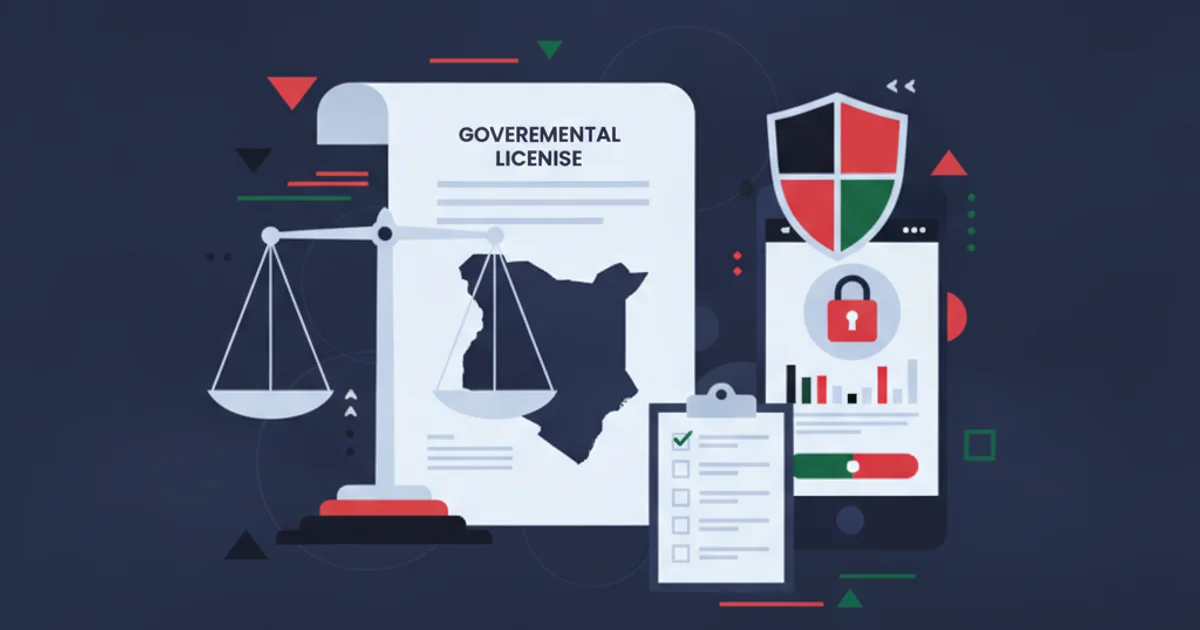
Kenya’s Gambling Regulatory Authority can resume most work under the Gambling Control (Licensing) Regulations, 2026 after the High Court narrowed an earlier stay. The ruling restores the application, assessment and general compliance framework while keeping two contested areas—licence fees and minimum gambling capital—on hold pending a final decision.
What Legal Notice 111 changes
The regulations were published as Legal Notice 111 of 2026 under the Gambling Control Act, 2025. They create licence categories for casinos, bookmakers, lotteries, online gambling, gambling software and platforms, equipment businesses, key employees and cross-county advertising. They also bring those activities under the Gambling Regulatory Authority rather than the former Betting Control and Licensing Board framework.
The court dispute matters because the original order of 20 July had paused the regulations as a whole. On 7 August, Justice W. Musyoka varied that order after finding that the applicants’ principal challenge concerned the financial schedules rather than every operational provision. The revised stay applies to the Second Schedule on fees and the Third Schedule on minimum capital; the rest of the licensing regulations may be implemented and enforced.
For betting sites in Kenya, that means licensing work cannot be treated as generally frozen. Published legal analysis of the rules identifies detailed ownership and beneficial-owner disclosures, business and technical information, governance documents, responsible-gambling policies, anti-money-laundering controls, data-protection measures and dispute procedures among the application requirements. The Authority may also inspect premises, systems, security arrangements and internal controls before issuing a licence.
Higher fees and an unsettled financial position
The financial position is less settled. The published regulations contain sharply higher fees for several licence classes and minimum-capital thresholds for operators, but the High Court has temporarily prevented the fee and capital schedules from being implemented. Those amounts are disputed rather than cancelled. Operators should not describe them as payable current charges unless the court or Authority confirms that position after the case is decided.
Transitional timing also requires care. The regulations state that licences valid under the repealed law remain in force for 60 days from publication and require existing holders to apply under the new framework within that period. The litigation interrupted implementation, and industry reporting says the Authority has since opened the 2026 licensing process. Operators should obtain the current deadline directly from the Authority rather than calculating it from the original publication date alone.
What it means for players
For players, the change does not provide a permanent endorsement of every familiar betting brand or mobile application. Before depositing, confirm the exact operator and domain against current Gambling Regulatory Authority information, check which product the licence covers, read withdrawal and identity-verification terms, and review deposit limits, self-exclusion and complaint options. A foreign licence or an accessible Kenyan payment method does not by itself establish local authorisation.
The next legal milestone is the substantive judgment scheduled for 2 October 2026 after written submissions due in September. Until then, the verified position is limited but important: most of Kenya’s new licensing machinery is operational, while the contested fee and capital schedules remain stayed. Businesses and customers should rely on current regulator and court records because the status can change when the case is determined.
Kenya’s shift is therefore more than a change of regulator name. It extends oversight across operators, technology providers, ownership, advertising and operational controls. Whether the disputed financial thresholds survive will affect market entry and competition, but consumer protection, licensing scrutiny and compliance preparation continue in the meantime. Gambling is for adults only and should never be treated as guaranteed income.
Sources: Kenya Law, “The Gambling Control (Licensing) Regulations, 2026” (Legal Notice 111 of 2026, 29 June 2026, official legislation); Kenya Law, “Owuor & another v Prime Cabinet Secretary and Cabinet Secretary for Foreign and Diaspora Affairs & 4 others” ([2026] KEHC 12766 (KLR), 7 August 2026, official High Court ruling); WKA Advocates, “High Court Narrows Stay on the Gambling Control (Licensing) Regulations, 2026” (8 August 2026, secondary legal analysis); and iGaming.News, “Kenya Gambling Authority Opens 2026 Licensing Window Following High Court Ruling” (21 August 2026, secondary industry reporting). Operators and players should confirm current deadlines, fees and licence status with the Authority and Kenya Law.
Topics
Share this article
Related articles


Related casino offers
 bet365Editorial4.9
Country-specific welcome offer
Claim offer Rexbet CanadaEditorial4.9
Get a 200% Bonus, $100 Free Bets and 50 Free Spins
Claim offer SpinoEditorial4.8
20% Welcome Cashback up to 2,000 USDT
Claim offer
18+ · T&Cs apply · begambleaware.org · Advertising disclosure: we link to operators directly and take no commission.