New Zealand Online Casino Rules Set Player-Protection Standards
New Zealand’s licensed online casinos will face mandatory limits, cooling-off periods, credit-card restrictions, withdrawal safeguards and tighter advertising rules.
- Published


New Zealand has moved from debating online casino regulation to defining the controls that licensed platforms must provide. The Online Casino Gambling Act 2026 is in force, and its supporting regulations set detailed standards for account verification, spending controls, self-exclusion, withdrawals, game design, bonuses and advertising. The fully licensed market is still being implemented, so an offshore casino available to a New Zealand player should not yet be assumed to hold a New Zealand licence.
What the new online casino framework covers
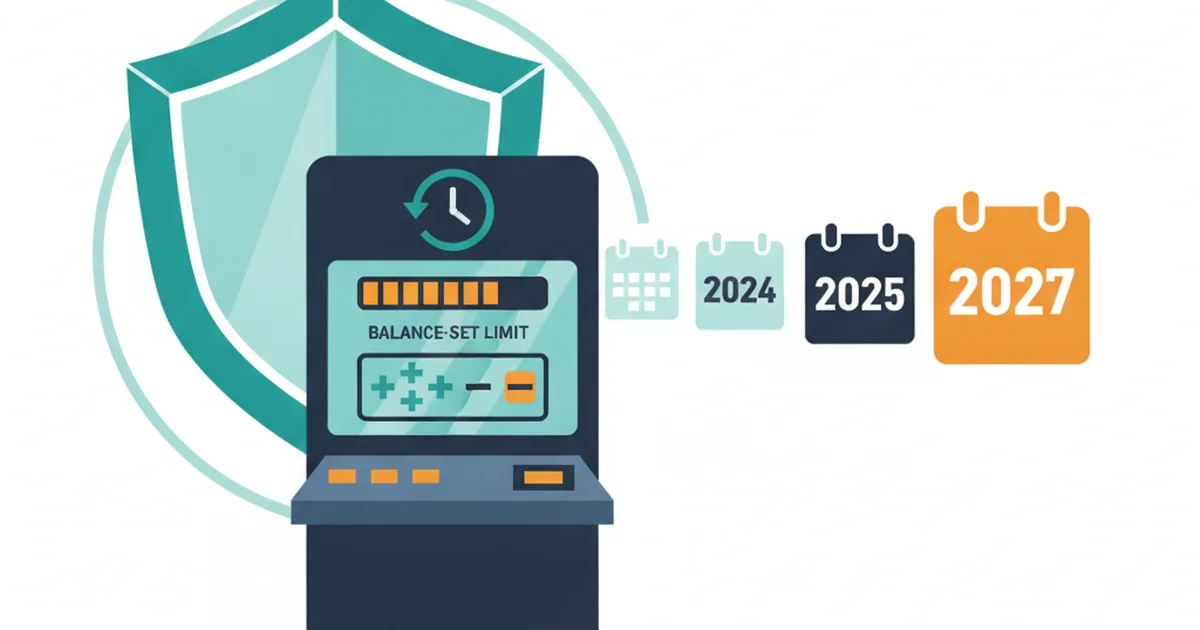
The Act creates a regulated market administered by the Department of Internal Affairs. Up to 15 licences may be available through a competitive process, with each licence covering one brand and no person able to control more than three licences. The Department says implementation is phased and the licensed regime is not expected to be fully operational until 2027.
This framework is limited to online casino gambling. It does not turn a casino licence into permission to offer sports betting or lottery products. Players should therefore check the exact brand, domain and product against the Department’s eventual licensed-operator information rather than relying on a familiar name, overseas licence or search advertisement.
Players must be offered practical limits
Licensed operators must let customers set daily, weekly or monthly limits on playing time, deposits and total spend. Customers who have not set a particular limit must be prompted when opening an account and then monthly. A request to remove or increase a limit cannot take effect for at least 24 hours, creating a cooling-off period between the decision and the higher exposure.
Platforms must also provide configurable breaks, time-outs and pop-up alerts. The minimum options include a break of at least five minutes after 60 minutes of continuous play, time-outs of 24 hours, one week or one to three months, and at least one pop-up after 60 minutes. The alert must show session time and losses, offer an exit route and pause play until the customer acknowledges it.
Self-exclusion has enforceable timing
A customer must be able to choose self-exclusion for a defined or indefinite period through an accessible process. The operator must apply it without undue delay and no later than 24 hours after the election. The customer cannot shorten the selected period, and marketing contact during exclusion is restricted to communication needed for legal obligations.
Returning is not automatic when a fixed exclusion period expires. The customer must deliberately access the account, acknowledge available help services and confirm the decision to gamble again. A further 24 hours must then pass before play resumes. Operators that reasonably identify a customer as a problem gambler must provide the evidence and support information and, where the concern remains, can be required to exclude the customer across all their platforms for up to two years.
Credit cards, autoplay and misleading wins are restricted
The regulations prohibit payment methods involving a credit contract, including credit cards. They also stop operators from offering autoplay or allowing more than one online slot game to be played at once. Interfaces, games and incentives must not be designed to encourage excessive, continuous or impulsive gambling.
A return that is equal to or below the amount staked must be shown as a loss, not celebrated as a win with visual or audio effects. Operators must not imply that playing longer makes an unaffected random outcome more likely, exaggerate a customer’s chance of winning or label a game as a familiar casino product when its characteristics do not substantially match that product.
Bonus and loyalty rules change the usual casino offer
An incentive that requires no customer spend cannot exceed NZ$100. Where customer funds must be spent, the incentive is capped at the lower of NZ$100 or 200% of the relevant deposit or bet. Customers must have at least 60 days to satisfy payout terms, and winnings produced through an incentive must remain withdrawable rather than being forced back into play.
Advertising cannot call an incentive free when a stake or payment is required. Loyalty programmes connected to licensed online casino gambling must not reward participation in sports betting, lotteries or other gambling outside the permitted online casino product. These controls make the live terms more important than a headline percentage or promotional banner.
Withdrawals and customer money receive specific safeguards
A licensed platform must keep uncommitted customer funds in a bank account separate from its other accounts. Customers must be able to see their balance and play history, close an account and request a withdrawal. Once requested, a pending withdrawal cannot be cancelled by the customer, reducing the opportunity to reverse the decision and continue gambling.
Withdrawal conditions must not be oppressive or unjustly burdensome, and funds must be returned without undue delay after legal checks are completed. The operator must also return uncommitted money after self-exclusion, operator exclusion or account dormancy. Payment and identity checks will still affect individual cases, but licence status does not permit an operator to create avoidable withdrawal friction.
Advertising faces audience and consent controls
Online casino advertising must be identifiable as advertising and as relating to gambling. Direct marketing generally requires express consent, while account holders must be able to choose communication frequency, channel, gambling type and whether messages may contain inducements. Excluded customers cannot be treated as an ordinary marketing audience.
Ads must not be placed where more than 20% of the likely audience is under 18, appeal to children through youth-oriented creative choices or depict someone who is or appears under 25 participating in online casino gambling. Targeting people aged 18 to 25 requires reasonable steps to prevent under-18 exposure. Required harm-minimisation messages must use the same language as the advertisement.
What New Zealand players should check now
The existence of the Act and regulations does not mean every currently accessible casino has completed New Zealand licensing. During implementation, players should avoid treating overseas registration, a generic “licensed” badge or local-looking marketing as proof of authorisation. Check the Department of Internal Affairs for the current stage of the licensing process and, once published, match the exact operator brand and domain.
Before depositing, review the live limit controls, self-exclusion route, accepted payment methods, bonus conditions, account-verification rules, withdrawal process and complaint channel. Keep transaction and support records. Online casino gambling is for adults only, no licence removes the risk of loss, and limits should be set before play rather than after spending has become difficult to control.
Sources: New Zealand Legislation, “Online Casino Gambling Regulations 2026” (made 2 June 2026; in force 3 July 2026, official secondary legislation); New Zealand Legislation, “Online Casino Gambling Act 2026” (assented 28 April 2026, official Act); New Zealand Department of Internal Affairs, “Online Casino Gambling” (official implementation overview, accessed 5 September 2026); and New Zealand Department of Internal Affairs, “Information for online casino providers: licensing and compliance” (updated 1 May 2026, official licensing timeline and transition guidance). Requirements, licensing dates and operator status can change; use current Department and legislation records.
Topics
Share this article
Related articles

Related casino offers
 BetssonEditorial4.4
Market-specific welcome offer
Claim offer UnibetEditorial4.5
Country-specific welcome offers
Claim offer GGPokerEditorial4.5
$100 in free rewards or 100% up to $600 (market-specific)
Claim offer
18+ · T&Cs apply · begambleaware.org · Advertising disclosure: we link to operators directly and take no commission.