New South Wales Plans Statewide Gambling Exclusion and Advertising Curbs
New South Wales has announced a $95.2 million gambling reform package covering statewide self-exclusion, gaming-room facial recognition, fewer poker machines and tighter marketing rules.
- Published

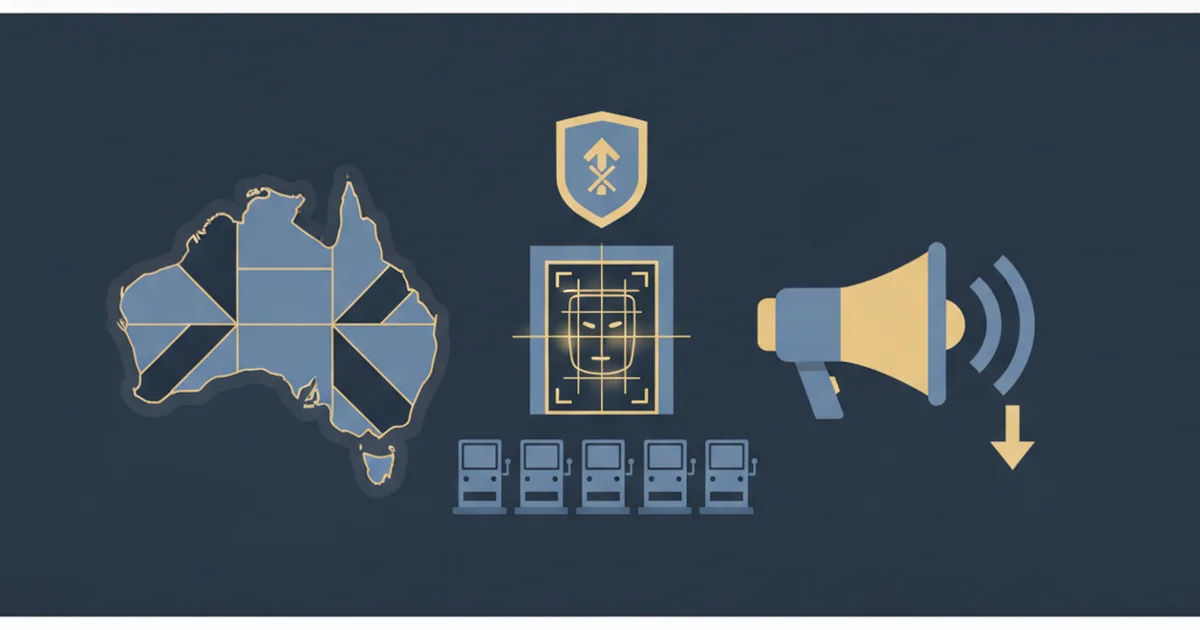
The New South Wales Government has announced a wide gambling reform package built around statewide exclusion, mandatory facial recognition at gaming-room entrances, fewer poker machines and tighter advertising controls. The package is funded at A$95.2 million over four years, but several measures still require legislation and implementation work before they affect players or venues.
What the statewide exclusion register would do
The central player-protection measure is a single Statewide Exclusion Register for every NSW hotel and club with gaming machines. It is intended to replace the current fragmented model, under which a person can exclude from selected venues and venue staff largely enforce each agreement. Mandatory facial recognition is scheduled to begin with the register in 2028 so an exclusion can follow a person across participating gaming rooms.
The technology has a narrow stated purpose, but its operation will require close scrutiny. The Government says facial recognition will be used at gaming-room entrances to identify excluded people and support police action against money laundering. Clear controls over enrolment, matching accuracy, access, retention, false alerts and complaints will matter because a statewide biometric system carries privacy and fairness risks alongside its harm-reduction aim.
Family members, venues and police would gain another route to intervention through a proposed third-party exclusion scheme. That could help where a person at serious risk does not self-exclude, but the final rules will need procedural safeguards, evidence standards and review rights. The announcement establishes the policy direction rather than every operational detail.
Fewer poker machines and slower entitlement growth
NSW also plans to accelerate the reduction in poker-machine numbers. The state currently has about 87,000 machines across roughly 2,100 clubs and hotels. When gaming-machine entitlements are traded, the forfeiture rate would increase from one in three to one in two, meaning one entitlement would be removed for every two traded. A new sinking cap would fall as entitlements leave circulation, and venues would be able to cancel entitlements voluntarily.
Account-based play remains a future option rather than an immediate mandate. The Government plans to upgrade the Centralised Monitoring System over two years so venues can adopt account-based technology. It says the model can improve visibility and anti-money-laundering controls while allowing cash use, but the package does not yet impose universal account-based gambling.
Advertising and direct-marketing limits
Marketing changes extend beyond gaming rooms. The package would end gaming-related VIP programmes, prohibit gambling advertising on NSW Government and council-owned assets, and prevent betting service providers from sending direct marketing by phone, email or text without advance express consent. Affiliate and influencer promotions would face new transparency requirements, while commissions linked to higher-risk products would be restricted.
The case for reform is supported by the NSW Gambling Survey 2024, which interviewed 10,000 adults. It estimated that 3.1% of adults experienced moderate-risk gambling and 0.9% experienced high-risk gambling. Electronic gaming machines accounted for more than half of the measured harm to gamblers, while 12.7% of NSW residents reported harm from another person’s gambling. The survey response rate was 7.9%, so its weighted estimates should be read with the published methodology and uncertainty rather than as exact counts.
What it means for players and venues
For players, no announcement or technical system removes the need for practical checks. Use the current exclusion and support options available now rather than waiting for the 2028 register, review direct-marketing permissions, and confirm that any online wagering provider is authorised for Australia. Online and venue-based products follow different legal frameworks; an accessible website does not establish legality.
For clubs, hotels, wagering businesses, affiliates and technology providers, the next milestones are the legislation, technical standards and implementation timetable. Biometric governance, consent records, marketing suppression, entitlement transfers and system upgrades will all need auditable controls. Until those details are settled, the package should be described as a funded government reform programme, not as a fully commenced set of obligations.
The reform is significant because it combines venue controls, machine numbers, advertising, online-harm policy and enforcement in one programme. Its effectiveness will depend on whether exclusion works consistently across venues, privacy protections are credible and the promised reduction in machine availability occurs in practice. Gambling is for adults only and should never be treated as a way to solve financial pressure.
Sources: NSW Government, “Stronger protections in major NSW gambling reform” (25 August 2026, official ministerial release); Liquor & Gaming NSW, “NSW Government Gaming Reform Package” (25 August 2026, official package summary); NSW Responsible Gambling Fund, “NSW Gambling Survey 2024” (October 2024, official commissioned research); and iGaming Business, “New South Wales government announces gambling reforms” (25 August 2026, secondary industry reporting). Timings and duties may change as legislation and implementation standards are published, so readers and businesses should check current NSW Government and Liquor & Gaming NSW guidance.
Topics
Share this article
Related articles
Related casino offers
 Rexbet CanadaEditorial4.9
Get a 200% Bonus, $100 Free Bets and 50 Free Spins
Claim offer SpinoEditorial4.8
20% Welcome Cashback up to 2,000 USDT
Claim offer LeoVegasEditorial4.7
Up to €1,000 + 2,600 Free Spins (market-specific)
Claim offer
18+ · T&Cs apply · begambleaware.org · Advertising disclosure: we link to operators directly and take no commission.