Sports Betting Bans for Athlete Harassment: What Leagues Want
Five US sports leagues and their players’ associations want uniform rules that permanently exclude bettors who threaten or abusively harass sports participants.
- Published
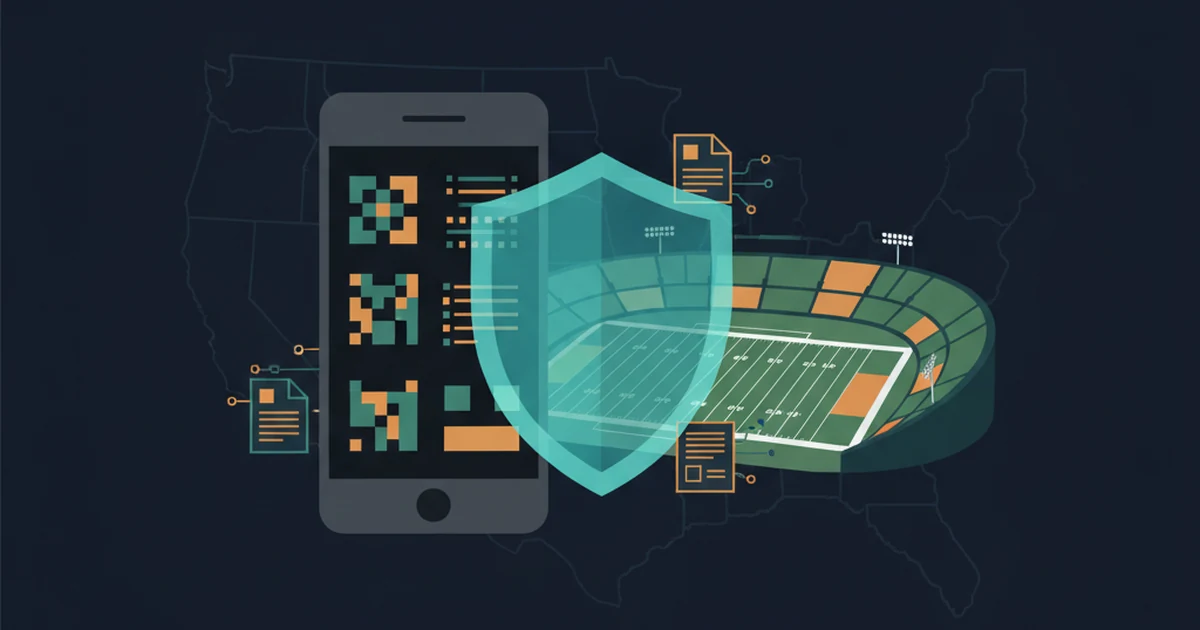
Five major US professional sports leagues and their players’ associations are asking state gambling regulators to create uniform exclusion rules for bettors who threaten or abusively harass athletes and other sports personnel. The joint request, reported on 15 September 2026, calls for verified offenders to lose access to licensed sportsbooks and mobile betting accounts permanently.
What the leagues are asking regulators to do
The NFL, MLB, MLS, NBA and NHL, together with their respective players’ associations, want state gaming commissions to require licensed operators to revoke wagering privileges when a person is verified to have issued a violent threat or engaged in abusive harassment. The requested protection would extend beyond professional athletes to amateur athletes, coaches, officials, team personnel and their families.
The coalition also wants a standard reporting route through which leagues and unions can submit evidence to regulators and law enforcement. A state could then consider the evidence under its own exclusion procedure rather than leaving every operator to make an isolated account decision. The letter further proposes reciprocal treatment so that an exclusion imposed in one state can be recognised elsewhere.
This is a proposal, not a nationwide rule
No single US gambling regulator can impose the requested system across every legal betting market. Sports wagering is regulated state by state, and each jurisdiction controls its own licences, operator duties, hearing procedures and exclusion lists. The leagues’ letter therefore asks individual commissions and policymakers to adopt a common model; it does not itself ban anyone or change a state’s law.
That distinction matters for bettors and operators. Existing account terms, criminal laws and state regulations continue to apply now. A threat can already lead to action by a sportsbook, social platform, regulator or law-enforcement agency, but the available process and consequence differ by jurisdiction. A permanent betting exclusion would normally require the authority and procedure provided by the relevant state.
How Ohio’s sports betting ban works
Ohio provides a clear statutory example. Section 3772.031 of the Ohio Revised Code directs the Casino Control Commission to maintain a sports-gaming exclusion list and expressly permits exclusion of a person who threatens violence or harm against someone involved in a sporting event when the threat is related to sports gaming.
The Ohio law covers threats made before, during or after an event. It also requires notice of the commission’s intention to add a person to the list and generally gives that person 30 days to request an adjudication hearing. That due-process structure is important: a report or allegation is not automatically the same as a final exclusion decision.
Wyoming also uses involuntary exclusion
The Wyoming Gaming Commission approved an athlete-harassment addition to its involuntary exclusion rules in November 2024. Its official online sports-wagering page says the change allows a person found guilty of athlete harassment to be placed on the state list. This gives the current national proposal a working state-level precedent, although Wyoming’s exact rule and procedure should not be assumed to apply elsewhere.
The joint letter also identifies West Virginia and Louisiana as jurisdictions with relevant exclusion processes. Players should consult the current regulator material in their own state because list criteria, evidentiary standards, appeal rights and the operators covered can differ. Reciprocal recognition between states is one of the changes being requested, not an established nationwide feature.
What licensed sportsbooks may need to change
If states adopt the proposal, licensed operators could need a documented route for receiving verified reports, connecting an identified person to a wagering account, preserving evidence and implementing a regulator’s exclusion order. Cross-state reciprocity would add another operational question: how an operator confirms that an exclusion issued elsewhere applies to the same customer without relying on a name match alone.
Any workable system must combine safety with a fair decision process. Regulators would need to define abusive harassment, the evidence required, who makes the finding and how an affected person can challenge an error. They would also need safeguards for identity matching, data sharing and retention. None of those implementation details is resolved merely by agreeing that violent threats are unacceptable.
Why proposition bets are part of the debate
Reuters reported that the request follows public accounts of hostile messages aimed at athletes after losing wagers, particularly player-proposition bets tied to an individual performance. That does not mean every proposition bettor behaves abusively or that the leagues have asked states to prohibit all player props in this letter. The requested remedy targets verified threatening or abusive conduct by individuals.
The broader concern is that a bet tied to one player can make that person an immediate target for someone angry about the result. Operators can reduce friction by making reporting channels visible, acting consistently on credible evidence and avoiding promotional language that treats abuse as ordinary fan frustration. Leagues and teams also need routes that preserve evidence and escalate genuine safety risks promptly.
What bettors should understand
Losing a wager never justifies contacting, threatening or abusing an athlete, coach, official, team employee or family member. A sportsbook account is a regulated service, not an entitlement, and conduct outside the betting app can still lead to account restrictions, exclusion proceedings or a law-enforcement response when it can be linked to the bettor.
Anyone who notices betting losses driving anger, repeated messaging or attempts to confront a participant should stop wagering and use the responsible-gambling tools available in their state. Deposit limits, time-outs and self-exclusion address the gambling activity; immediate threats or safety concerns should be reported through the appropriate platform and local authorities. Gambling is for adults, carries a risk of loss and should never be treated as a way to recover money already lost.
What happens next
The next meaningful developments will come from state commissions or legislatures. Watch for published rule proposals, public consultations, bills or enforcement guidance that define the covered conduct and the review process. Until a jurisdiction acts, the joint letter remains a coordinated policy request rather than a nationwide sports betting ban.
A consistent system could close gaps created when the same bettor uses accounts in several states. Its legitimacy will depend on reliable evidence, accurate identification, proportionate scope and a genuine route to contest mistakes. Those details will determine whether a reciprocal exclusion model protects participants without replacing due process with an allegation alone.
Sources: Ohio Laws, “Section 3772.031 — Involuntary exclusion from casino gaming and sports gaming” (effective 3 October 2023, checked 18 September 2026, official exclusion grounds, notice and hearing process); Wyoming Gaming Commission, “Online Sports Wagering” (checked 18 September 2026, official summary of the athlete-harassment exclusion change); Reuters, “US sports leagues urge lifetime betting bans for those threatening athletes” (15 September 2026, joint-letter demands and national context); and Associated Press via BNN Bloomberg, “5 major sports leagues and players associations ask for protections from sports bettors’ threats” (15 September 2026, independent secondary reporting and quoted letter language). Rules differ by state; consult the relevant regulator’s current law and exclusion procedure.
Topics
Share this article
Related articles


Related casino offers
 Rexbet CanadaEditorial4.9
Get a 200% Bonus, $100 Free Bets and 50 Free Spins
Claim offer BetssonEditorial4.4
Market-specific welcome offer
Claim offer UnibetEditorial4.5
Country-specific welcome offers
Claim offer
18+ · T&Cs apply · begambleaware.org · Advertising disclosure: we link to operators directly and take no commission.