Casino Withdrawal Delays: L&L Europe Pays £900,000
L&L Europe will pay £900,000 after the UK regulator found delayed withdrawals, unfair terms, weak risk controls and missed signs of gambling harm. Here is what the case means for casino customers.
- Published

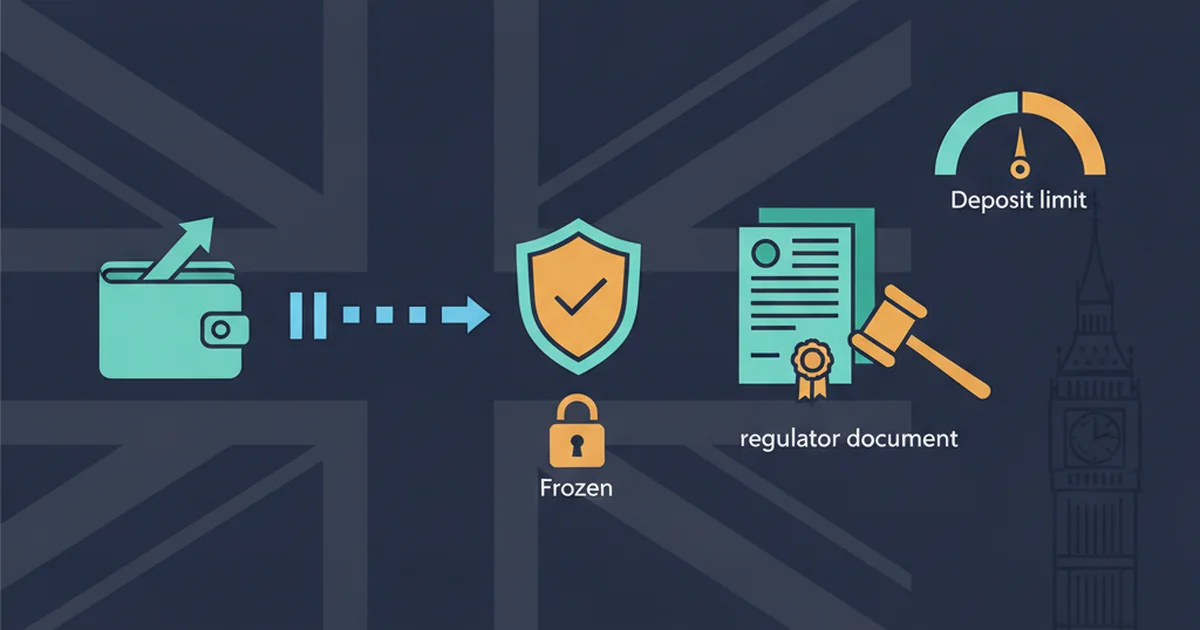
L & L Europe Limited will make a £900,000 regulatory-settlement payment after the Gambling Commission found failures involving casino withdrawals, anti-money-laundering controls, customer interaction and deposit limits. The regulator published its findings on 21 October 2026 after reviewing conduct between October 2024 and October 2025.
The case is directly relevant to anyone comparing UK online casinos by payout speed. The Commission found that some withdrawals were delayed by a routine review process and that information was sometimes requested at withdrawal even though it could reasonably have been sought earlier. It also found that customers could request only one withdrawal at a time under the operator’s terms. L & L Europe has changed the affected processes, and the settlement is not a finding that every withdrawal or customer account was mishandled.
Why L & L Europe will pay £900,000
The Gambling Commission began a regulatory review under section 116 of the Gambling Act 2005 following a compliance assessment of L & L Europe’s remote operating licence. The review identified breaches concerning fair and transparent terms, customer identity checks, anti-money-laundering controls, remote customer interaction and technical standards.
The £900,000 is a payment in lieu of a financial penalty and will go to the Consolidated Fund. The operator must also contribute towards the Commission’s investigation costs and agreed to publication of the facts. The regulator treated the failings as serious, while recognising that L & L Europe implemented an action plan promptly, cooperated with the investigation and accepted the failings at an early stage.
A regulatory settlement records the outcome agreed with the licensee. It does not award compensation to individual customers or decide a particular unpaid-balance dispute. A customer with an unresolved withdrawal still needs to use the operator’s complaints procedure and, where eligible, the approved Alternative Dispute Resolution route.
What the regulator found about casino withdrawals
The operator’s terms allowed a customer to have only one withdrawal request awaiting authorisation. A second request could not be made until the first had been authorised. Commission officials also observed withdrawals being withheld for reasons other than a legal or regulatory requirement. The public statement says L & L Europe moved swiftly to address this issue.
A separate fraud and collusion process manually reviewed every fifth or tenth withdrawal for some customers. Those reviews sometimes led to requests for additional information before payment. L & L Europe accepted that this delayed withdrawals and that, in some cases, the information could have been requested earlier in the customer relationship. The operator has amended the process so withdrawals are withheld only where there is a legal or regulatory reason.
That distinction matters. A casino can have a genuine duty to investigate fraud, money laundering or another new risk when a withdrawal is requested. It should not use the payout itself as the first convenient point to collect information that was reasonably available earlier, nor should a fixed sampling rule replace a risk-based assessment of the account.
What UK rules say about withdrawal verification
Gambling Commission licence condition 17.1.1 requires remote operators to establish a customer’s identity before allowing that person to gamble. The verified information must include the customer’s name, address and date of birth, although other information may also be required.
The same condition says a withdrawal request must not create a requirement for additional information if the operator could reasonably have requested it earlier. There is an important exception: the operator may seek information it is legally required to obtain at that time. A newly identified account-takeover, fraud or money-laundering concern can therefore justify a targeted check even when the basic identity check was completed before play.
Before accepting a deposit, an operator should also explain which identity documents or other information it may need, the circumstances in which they could be requested and how they should be supplied. A customer should read that notice before paying and provide sensitive material only through the verified operator’s secure channel.
Why the settlement was not only about payouts
The review also found weaknesses in the operator’s money-laundering and terrorist-financing risk assessment. The Commission said the scoring method and rationale were unclear, the controls applicable to British customers were not clearly set out, and the policies relied too heavily on fixed financial thresholds and sampling rather than the individual customer’s risk profile. L & L Europe has since created a standalone risk assessment for Great Britain.
The Commission’s example involved a customer who deposited £4,400 within eight hours of registration and then requested a £50 withdrawal. The operator accepted that the source of funds was a gambling account without adequately considering that the bank account was two weeks old or establishing that the money came from employment, business income or savings. The same customer supplied an incorrect address twice after being asked for documents, but the discrepancy did not trigger suspicion.
This illustrates why the rule against avoidable withdrawal friction does not remove an operator’s duty to investigate genuine risk. The compliance failure was not simply that information was requested; it was that controls were poorly timed, insufficiently risk-based or inconsistently applied. Customers should expect a licensed casino to make proportionate checks without treating every routine payout as suspicious.
Missed signs of gambling harm
The public statement says safer-gambling alerts focused mainly on financial thresholds. Alerts covering time spent gambling, failed deposits and deposit frequency were active on some websites but not across the whole suite, while the process generally required two indicators on the same day before producing an alert.
One customer made 84 failed deposits in seven days because of insufficient funds without the system identifying potential harm. A 21-year-old lost £6,500 within three days of opening an account, while an 18-year-old lost £4,000 in eight minutes; the regulator said age was not taken into account as a risk indicator in either case. These are examples from the regulatory review, not typical outcomes or suggested spending levels.
The Commission also found that the operator could not demonstrate an effective overall process for measuring whether customer interactions reduced risk. Some manual account reviews contained little detail, and calls required by the operator’s own policy were not always attempted promptly. The lesson for customers is that a responsible-gambling page or automated warning has value only when the underlying system detects relevant behaviour and follows through.
A deposit limit was exceeded
Technical controls were also part of the case. A customer returning from self-exclusion had agreed a £1,000 net monthly deposit limit. Over nine days, that customer deposited £2,898 and withdrew £1,800, leaving net deposits of £1,098—£98 above the agreed limit. The Commission concluded that the operator had not implemented the facilities required for customers to set financial limits effectively.
A casino deposit limit should operate as a real control rather than a dashboard label. Customers should save confirmation of a limit, check the relevant rolling or calendar period and stop depositing if the displayed balance does not match the agreed setting. A payment-method ceiling is separate and does not replace the gambling-account limit.
What UK casino customers should check before depositing
- Verify the exact domain. Match the casino website to an active operator and remote-casino permission in the Gambling Commission public register. A brand name alone is not enough because one licensee may operate several domains.
- Read the withdrawal terms. Check processing times, method limits, fees, pending periods and whether more than one request can be open. Save the terms that apply when you deposit.
- Understand verification in advance. Note which identity, payment-ownership or source-of-funds information may be requested and use only accounts held in your own name.
- Test the controls. Confirm a deposit limit has taken effect and keep the confirmation. Do not rely on a failed card transaction or payment-provider ceiling as a gambling budget.
- Keep a written record. Save withdrawal confirmations, transaction references, account messages and support replies. Do not cancel a payout and continue gambling because support suggests the delay will be easier to resolve later.
Readers looking at advertised payout speeds can use our UK fast-withdrawal casino guide to separate operator approval from payment-provider and bank settlement times. No legitimate casino should require a further deposit, a tax payment or a release fee to unlock a normal withdrawal.
How to challenge a delayed casino withdrawal
Ask the operator to confirm the exact status of the withdrawal, the reason for the delay and any action required. If documents are requested, ask what issue each document addresses and why it could not reasonably have been requested earlier. A legal restriction may limit what the operator can disclose, but a generic reference to “regulation” should not end the conversation where a clearer explanation can lawfully be given.
If the published timeframe passes without a satisfactory answer, make a formal complaint to the gambling business. Include dates, amounts, payment method, account and transaction references, the relevant term and copies of previous correspondence. The Commission’s complaints guide says the operator has eight weeks to resolve the complaint. An unresolved eligible dispute can then go to the operator’s approved ADR provider, or earlier if the parties reach deadlock.
The Gambling Commission does not access an individual account and order the operator to pay the customer. It uses reports and compliance information to supervise the industry. The formal complaint and ADR routes are therefore important when the issue is a specific balance, withdrawal decision or interpretation of terms.
What the L & L Europe case changes
The settlement reinforces an existing rule rather than creating a new right on 21 October 2026. British customers were already entitled to withdraw funds without unreasonable delay or restriction, subject to legitimate legal and regulatory checks. The case shows that the Commission can treat unfair withdrawal terms, poorly timed verification and weak risk controls as connected compliance failures.
L & L Europe says the withdrawal and risk processes identified by the review have been changed. Customers should judge any licensed casino by its current terms and conduct rather than assuming a settlement proves that every present or past account was affected. Gambling in Great Britain is for adults aged 18 or over; every stake can be lost, and fast access to a payout does not make casino play safe or profitable.
Sources: Gambling Commission, “L & L Europe Limited Public Statement” (21 October 2026, withdrawal, AML, customer-interaction and technical-standard findings); Gambling Commission, LCCP condition 17.1.1 (checked 22 October 2026, pre-gambling identity checks and withdrawal information requests); Gambling Commission, “I can’t withdraw my winnings” (updated 11 June 2021, withdrawal rights and complaint route); Gambling Commission, “How to complain” (updated 20 September 2023, evidence, eight-week process and ADR escalation); and European Gaming, “L & L Europe to pay £900k over withdrawal delays and AML failings” (21 October 2026, secondary reporting on the settlement).
Topics
Share this article
Related articles


Related casino offers
 CasumoEditorial4.4
100% up to €300 + 50 Bonus Spins (market-specific)
Claim offer VideoslotsEditorial4.5
100% up to €200 + 11 Spins (no wagering on spin winnings)
Claim offer KudosBetEditorial4.8
250% up to €4,000 + 4,000 Free Spins
Claim offer
18+ · T&Cs apply · begambleaware.org · Advertising disclosure: we link to operators directly and take no commission.