Online Casino Spain: New Payment Verification Rules
Spain will require online gambling deposits and withdrawals to use a payment method held by the gambling-account owner. Learn the transition rules, withdrawal effect and practical checks.
- Published

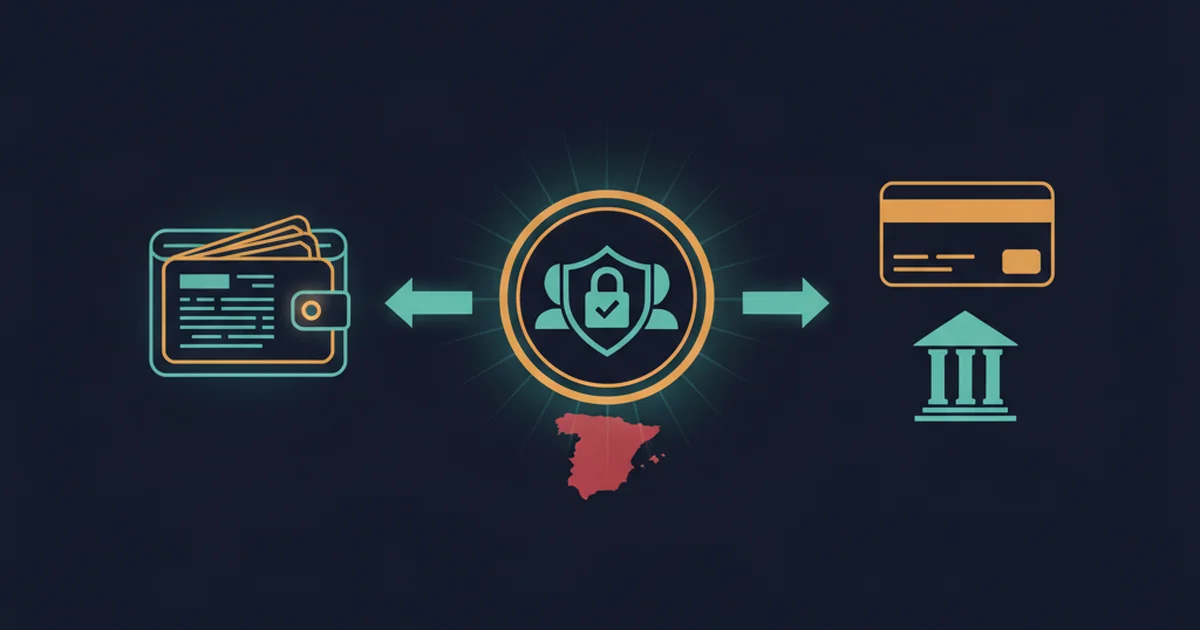
Spain is introducing a direct ownership check for online gambling payments. From 28 October 2026, licensed operators must verify that the person who holds the payment method used for deposits and withdrawals is also the holder of the gambling account. The rule applies to gambling offered through electronic, computer, telematic and interactive channels.
Royal Decree 813/2026 makes the change through Spain’s anti-money-laundering framework. It is not a new payment fee, deposit limit or ban on a named bank, card or wallet. The central requirement is a match between the two holders. Players should therefore use a payment route registered in their own name and respond promptly if an operator asks for evidence of ownership.
What Spain’s new casino payment rule requires
The decree rewrites Article 21 of the regulation supporting Law 10/2010. For remote gambling, identifying the customer is no longer enough on its own: the operator must also check that the holder of the payment method used to deposit and withdraw is the gambling-account holder.
The official text does not publish a universal list of documents or one technical method that every operator must use. The evidence may depend on the payment rail and the information available to the operator. A card, bank account or regulated wallet may expose ownership information differently. Customers should follow the secure request shown inside the verified operator account rather than sending financial documents through an unsolicited message.
The rule covers both directions of payment. Using a method successfully for a deposit does not remove the need for the operator to establish the ownership match before a withdrawal. Equally, an operator should not describe the check as a request to gamble more, make another deposit or pay a release charge.
When the payment-ownership rule starts
Royal Decree 813/2026 was published in Spain’s Official State Gazette on 8 October 2026 and enters into force 20 days later, on 28 October 2026. Operators receive six months to adapt their technical gambling systems. Customers who were already registered before the new obligation takes effect receive the same six-month transition period to make the changes needed for verification.
For those existing accounts, the transition therefore runs from 28 October 2026 to 28 April 2027. A newly opened account should not be assumed to receive the same legacy treatment: the transitional provision is expressly written for players registered before the obligation enters into force.
The dates matter because a published law, its commencement date and the end of a transition are different events. An operator may contact existing customers during the six-month window, but that does not mean the customer should ignore an authenticated request until the final day. Payment ownership can take time to establish if names differ or a payment provider supplies limited account information.
What happens to withdrawals during the six-month transition
The decree allows an existing customer whose ownership match has not yet been completed to continue depositing through an established payment method and to keep participating in the operator’s games during the transition. However, the customer cannot withdraw prizes obtained during that period until the check is completed.
That is a material restriction, not a routine processing estimate. Anyone with an older Spanish gambling account should verify the payment method before adding more money or playing, particularly if a withdrawal may be needed. Continuing to gamble while the check remains unresolved exposes deposited funds to ordinary gambling loss and can add winnings to an amount that is temporarily unavailable.
The provision refers to prizes obtained during the transition. It should not be expanded into a claim that an operator can permanently confiscate the account balance merely because verification is pending. If ownership is established within the period, the restriction created by that transition no longer has the same basis. Other lawful anti-money-laundering, fraud or sanctions checks may still apply to a particular transaction.
What happens if ownership is not verified by 28 April 2027
After the six months, an operator must terminate the contract unilaterally if the ownership requirement remains unverified and report that event to the Directorate General for the Regulation of Gambling (DGOJ). It must then return the existing balance, including prizes not previously paid because of the transitional restriction, subject to the anti-money-laundering and counter-terrorist-financing obligations that apply.
Account closure and balance return are therefore both part of the official rule. Closure does not turn the unpaid amount into operator revenue. At the same time, the requirement to return a balance does not prevent a proportionate investigation where there is a genuine legal concern about the customer, the payment source or the destination of funds.
A customer should keep the ownership request, documents supplied, upload confirmation, transaction history and operator response. If the account is closed, ask for a written statement of the remaining balance and the verified route through which it will be returned. Never provide a different person’s payment account simply to bypass the mismatch.
Which payment methods are affected?
The decree uses the broad expression “payment method” rather than naming only bank cards. Customers should not assume that an e-wallet, instant bank transfer, prepaid product or another electronic route sits outside the check. Whether a method can be accepted will depend on the operator being able to verify that its holder and the gambling-account holder are the same person.
Joint accounts, supplementary cards, changed surnames and wallets displaying abbreviated details may require more explanation even when the customer is legitimately entitled to use the funds. The decree does not itself resolve every edge case in public-facing language. Ask the operator what ownership evidence it accepts before depositing, and use another method in your own name if the selected route cannot provide a reliable match.
Do not use a partner’s, relative’s or friend’s card or wallet. Permission from that person does not make the holders identical. Third-party payment methods can also create separate fraud, chargeback and anti-money-laundering concerns under the operator’s terms.
How to verify a Spanish online casino and its payment request
- Match the exact domain. Open the DGOJ operator search independently and confirm that the website belongs to a listed legal operator.
- Check the authorised product. The register separates permissions for slots, roulette, blackjack, bingo, poker and betting. A listed company does not automatically have every permission.
- Read the account and payment names. Confirm that your legal name is consistent across the gambling account and the bank, card or wallet record.
- Use the secure account channel. Open the operator from the registered domain and upload evidence there. Do not follow a document request from an unverified email, social account or messaging app.
- Save the result. Keep the date, ownership confirmation and any restriction or withdrawal response in case the status is later disputed.
A DGOJ listing confirms the recorded operator, domains and permissions; it does not make a payment request safe when the message comes from a lookalike address. Fraudsters can copy a licence logo and refer to a real legal change. Navigate to the operator yourself and contact support through the authenticated account.
Payment verification is separate from Spain’s deposit limits
Spain’s payment-ownership rule and its cross-operator deposit-limit system are separate controls. The ownership check asks who holds the payment method. The combined limit, scheduled to apply from 25 March 2027, counts how much a player deposits across covered state-licensed operators. Passing one check does not override the other.
A deposit can therefore be refused because ownership cannot be verified, because an operator-level limit has been reached or, after the central system starts, because the combined limit has been reached. The operator should identify the actual reason rather than using a generic failure message. Our guide to Spain’s online casino deposit limits explains the separate daily, weekly and four-week controls.
What players should do before 28 October
Check every Spanish-licensed gambling account you still use. Remove obsolete third-party methods where the operator permits it, add a payment route held in your legal name and confirm that the name matches the account record. If the operator requests evidence, ask exactly which method needs verification and whether deposits or withdrawals are currently restricted.
Do not add money simply to test whether an old method still works. A successful deposit during the transition does not prove that winnings can be withdrawn, and gambling the balance can cause a loss before the ownership issue is resolved. If a request appears excessive or inconsistent, use the operator’s formal complaints process and preserve the evidence; the DGOJ can receive regulatory reports, but it is not a substitute for documenting the dispute with the operator.
The practical rule is straightforward: casino account, payment source and withdrawal route should belong to the same person. Verify the operator, use only your own payment method and complete the check before gambling with money you may need to withdraw. Gambling in Spain is for adults aged 18 or over, every stake can be lost, and payment verification does not make gambling profitable or affordable.
Sources: Boletín Oficial del Estado, “Real Decreto 813/2026” (published 8 October 2026, official payment-ownership rule, transitional provisions and commencement date); Dirección General de Ordenación del Juego, “Buscador de operadores” (checked 15 October 2026, official operator, domain and product-permission search); SBC News, “Spain tightens compliance controls on iGaming payments” (14 October 2026, secondary reporting on implementation); and Gambling.com, “Spain Sets New Online Gambling Payment Rules” (14 October 2026, secondary summary of the player transition).
Topics
Share this article
Related articles

Related casino offers
 CasumoEditorial4.4
100% up to €300 + 50 Bonus Spins (market-specific)
Claim offer VideoslotsEditorial4.5
100% up to €200 + 11 Spins (no wagering on spin winnings)
Claim offer LeoVegasEditorial4.7
Up to €1,000 + 2,600 Free Spins (market-specific)
Claim offer
18+ · T&Cs apply · begambleaware.org · Advertising disclosure: we link to operators directly and take no commission.