FATF Publishes New Gambling Money-Laundering Red Flags
The FATF’s first detailed assessment of online and illegal gambling identifies warning signs involving player accounts, payments, betting patterns and operator ownership.
- Published


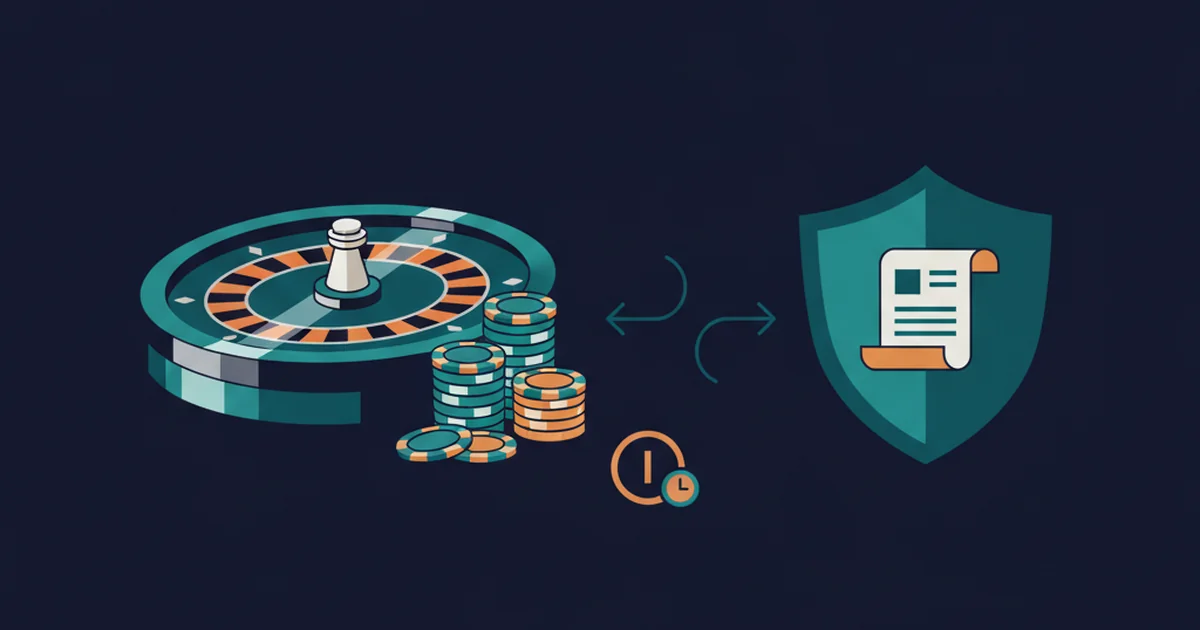
The Financial Action Task Force has published new global risk indicators for detecting money laundering and other illicit finance across gambling and gaming. Released on 9 September 2026, the assessment covers online and land-based casinos, sports betting, lotteries, other gambling products, video gaming and illegal operators. It is the FATF’s first detailed examination of online and illegal gambling risks and its broadest update on the sector since a casino-focused study in 2009.
Why the FATF report matters
FATF standards shape the anti-money-laundering frameworks used by jurisdictions around the world, although the new report does not itself create a single gambling law or customer rule. Governments, regulators, financial institutions and licensed operators can use its findings when assessing local risks, designing controls and investigating suspicious activity.
The project drew on questionnaire responses from 80 jurisdictions in the FATF Global Network, written comments from 29 jurisdictions and consultation with industry bodies, researchers and private-sector stakeholders. FATF says money laundering through gambling is an established risk in many jurisdictions, with online and land-based casinos and sports betting particularly exposed.
Illegal and offshore gambling is a central concern
FATF identifies illegal gambling as one of the sector’s most significant risks. In some countries, it says, the illegal market rivals or exceeds the legal market. Unlicensed offshore operators may present themselves as legitimate while offering anonymity and operating across borders where supervision and information-sharing are fragmented.
That warning does not mean every offshore operator or unusual transaction is criminal. It does mean that players should not treat a working website, familiar payment option or professional design as proof of licensing. The legal entity, exact domain, permitted products and current licence status should be matched against the relevant regulator’s official record before money is deposited.
Five groups of red flags
The published indicators are organised around customer behaviour and profile, online-account activity, betting patterns, payment methods and transactions, and product or platform features. They cover both individual account activity and risks in the way an operator is owned, licensed and connected to third-party services.
FATF stresses that the list is not exhaustive and that one indicator alone does not prove money laundering, terrorist financing or proliferation financing. Several indicators connected to the same customer or transaction can justify closer examination. Some behaviours can also reflect problem gambling rather than deliberate criminal conduct, and the two risks may sometimes coexist.
Account and identity warning signs
Online warning signs include attempts to open several accounts under the same or false names, multiple accounts created from the same device, mismatches between registration and payment details, suspicious identity documents, and repeated changes to contact or bank information. An inactive account that suddenly receives a large deposit inconsistent with its history can also require review.
Repeated virtual-private-network use, rapidly changing login locations and differences between a stated residence and detected location appear among the indicators. These signals require context: privacy tools and travel have legitimate uses, while a new location can also indicate account takeover. Licensed operators should examine the combined facts rather than assume that one technical signal establishes wrongdoing.
Betting patterns that may warrant examination
Examples include deposits deliberately structured below reporting thresholds, large withdrawals with minimal genuine play, consistently betting on all possible outcomes, low-risk wagers used to justify withdrawals, and coordinated peer-to-peer activity in which one participant repeatedly loses to another. FATF also highlights unusually large or coordinated bets on events already flagged by sports-integrity bodies for possible manipulation.
A customer’s activity may require attention when stakes, frequency or withdrawals change sharply without a plausible connection to the known account profile. Automated-looking wagers, improbable sustained winning patterns and betting by people connected to the relevant sport are additional indicators. None should be treated as proof without investigation.
Payments are a major exposure point
Cash, e-wallets, mobile money, prepaid products and virtual assets can all carry risk depending on how they are used. The indicators include deposits from unrelated third parties, several payment methods in different names, funds withdrawn to an account other than the original source, multiple small deposits consolidated into a larger withdrawal, high-velocity transfers and payments involving higher-risk jurisdictions.
Depositing and then withdrawing with little or no play is a particularly clear reason for closer review because a gambling account can otherwise be misused as a pass-through payment channel. FATF also points to attempts to bypass responsible-gambling limits, frequent failed payment attempts, chargebacks across several cards and the use of unlicensed remittance providers.
Ownership and platform risks extend beyond the player
The report warns about complex ownership structures that obscure who ultimately controls an operator. Other indicators include shareholdings arranged to avoid regulatory-check thresholds, weak oversight of white-label or third-party providers, frequent changes of brand name or website address, unexplained rapid growth, questionable ownership transfers and gambling sites advertised in jurisdictions where the activity is illegal.
The wider ecosystem matters because gambling platforms connect with payment providers, software companies, digital marketplaces, social networks and marketing services. Some of those businesses fall outside national gambling or anti-money-laundering frameworks. FATF says those gaps can hinder information sharing and allow criminals or illegal operators to exploit differences between jurisdictions.
What regulators and operators are expected to do
FATF recommends better risk awareness, stronger licensing and registration controls to prevent criminal ownership, greater public awareness of illegal offshore gambling, closer international cooperation and stronger public-private information sharing. The response should remain risk-based: controls should match the products, payment routes, customers and jurisdictions involved rather than treating every account as equally suspicious.
The Isle of Man Gambling Supervision Commission has already encouraged its licensees to consider the indicators in business and customer risk assessments, transaction monitoring, account monitoring, escalation procedures, staff training and wider anti-money-laundering controls. Other national regulators may interpret or implement the FATF work differently, so operators must still follow the binding rules in each licensed market.
What players should take from the report
Customers may face identity, source-of-funds and payment-ownership checks when using a licensed operator. Those checks can be inconvenient, but they are designed to prevent stolen identities, third-party funding and gambling accounts being used to move criminal proceeds. Submit documents only through the verified operator’s secure account or another channel stated in its official terms.
Never let another person use your gambling account, accept money to place bets for someone else, or receive withdrawals on another person’s behalf. Do not pay a private “verification” or “release” fee sent through social media or messaging apps. If an operator cannot be matched to a current regulator record, or its legal entity and payment recipient do not align, do not deposit until those details are independently confirmed.
Sources: Financial Action Task Force, “Risks of Gaming and Gambling” (9 September 2026, primary report and red-flag indicators); Financial Action Task Force, “FATF warns of emerging risks in gaming and gambling and publishes new risk indicators” (9 September 2026, official release); Isle of Man Gambling Supervision Commission, “FATF publishes new report on the Risks of Gaming and Gambling” (10 September 2026, regulator response); and European Gaming, “FATF publishes new red flag indicators for gambling” (10 September 2026, secondary industry coverage). National laws and operator obligations vary; consult the relevant regulator’s current rules.
Topics
Share this article
Related articles

Related casino offers
 GGPokerEditorial4.5
$100 in free rewards or 100% up to $600 (market-specific)
Claim offer CoolBetEditorial4.4
100% up to €200 + 50 Free Spins
Claim offer KudosBetEditorial4.8
250% up to €4,000 + 4,000 Free Spins
Claim offer
18+ · T&Cs apply · begambleaware.org · Advertising disclosure: we link to operators directly and take no commission.